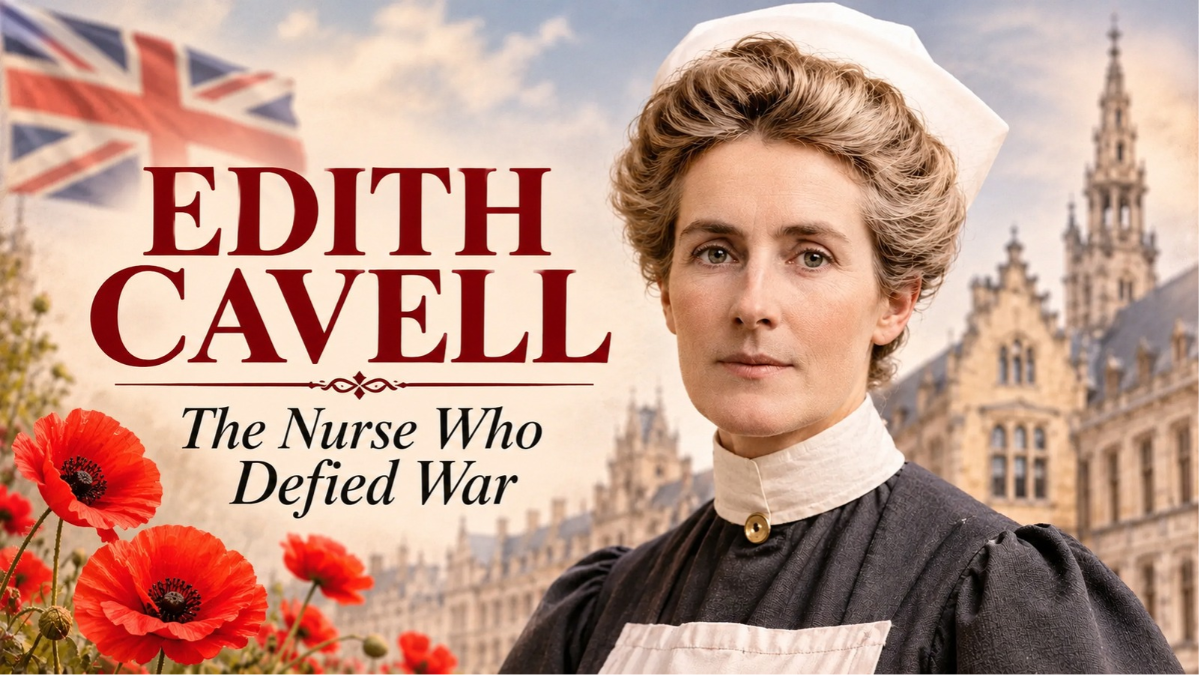
On 12 October 1915, a British nurse was executed by German soldiers in Brussels. Her name was Edith Cavell. She had cared for wounded soldiers on both sides of the First World War and helped Allied soldiers escape from occupied Belgium.
She was 49 years old, and her death caused international outrage. But who was Edith Cavell, and why is her story still remembered today?
Who Was Edith Cavell?
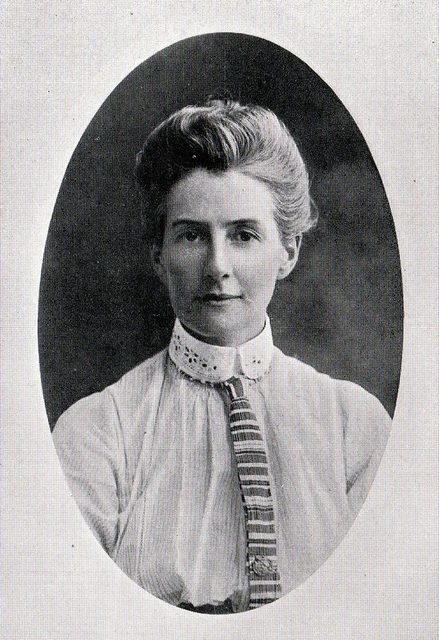
Edith Cavell was born in Norfolk, England, in 1865. She trained as a nurse and moved to Brussels, where she became the director of a nursing school in 1907. At a time when nursing was still developing as a profession in Belgium, Cavell helped improve training and standards of care.
When Germany invaded Belgium in 1914, she continued working in Brussels, treating wounded soldiers regardless of their nationality. But she was also involved in something far more dangerous.
Helping Soldiers Escape During the First World War
During the German occupation, many British and French soldiers were trapped in Belgium. Edith Cavell became part of a secret network that helped Allied soldiers escape to the neutral Netherlands. She provided shelter and assistance, knowing that helping enemy soldiers escape could lead to severe punishment. Cavell and the network she worked with helped more than 200 people escape.
In August 1915, she was arrested by the German authorities. She admitted her involvement, was tried by a military court and sentenced to death. On 12 October 1915, she was executed in Brussels. Her death shocked Britain and other countries, turning her into one of the most recognised figures of the First World War.
Shortly before her execution, Cavell reportedly told the chaplain who visited her:
“Patriotism is not enough. I must have no hatred or bitterness towards anyone.”
Her words remain one of the most memorable parts of her story.
Why Are Red Poppies a Symbol of Remembrance?
Every November, people across the United Kingdom wear red poppies to remember those who lost their lives in war. The tradition dates back to the First World War.Red poppies grew in the devastated battlefields of France and Belgium, inspiring Canadian military doctor John McCrae to write his famous 1915 poem In Flanders Fields.The flower gradually became a symbol of remembrance.
Two women played an important role in establishing this tradition. American professor Moina Michael promoted the wearing of red poppies in 1918, while French campaigner Anna Guérin helped introduce artificial poppies as a way of raising money for people affected by the war.In 1921, the British Legion adopted the poppy for its remembrance fundraising campaign.
Today, the red poppy remains one of Britain’s most recognisable symbols of remembrance.
The Story Behind Animosa’s Poppies
At Animosa, we love discovering the stories behind symbols, illustrations and small details. That is why red poppies appear in one of our clothing collections. Inspired by the flowers of remembrance, these embroidered poppies connect our designs with the history of the First World War and women such as Edith Cavell.
One of the pieces is a hooded sweatshirt featuring red embroidered poppies on a contrasting black side panel. Designed in Galicia and made in Portugal, it is a garment with a story behind its details.


A Story Worth Remembering
More than a century after her death, Edith Cavell remains an important figure in British history. She was a nurse who treated wounded soldiers from both sides, a woman who helped people escape during wartime and someone who refused to let hatred define her actions.
Her story is one of the many histories connected to the red poppy, a small flower with a remarkable past.