
Last Sunday, we celebrated another International Women’s Day (8M), each in our own way and from our own corner of the world. However you experienced it, we suspect you weren’t alone. Think about it: no one changes the world single-handedly.
When it comes to equality, in particular, the legal and social progress made over recent decades has been the result of women’s associations, collectives and groups working patiently and strategically for years, rather than a single isolated act. We shared 5 examples the other day on social media.
Let’s talk about friendship between women as a driving force for progress, and what happens when women come together and organise.
Friendship Between Women as a Driving Force for Progress
Official history tends to focus on the individual women who have helped move us forward, but the romantic image of the lone heroine is inaccurate. Look a little closer, and behind every step forward you’ll find conversations, discreet meetings, letters, phone calls, shared notebooks, endless coffee dates, and collective decisions. Friendship as a quiet driving force for progress.
Sometimes, these networks took the form of formal associations with constitutions and headquarters. Other times, they began as small groups gathering to talk about what seemed impossible to change. What’s fascinating is that many of these conversations went on to change laws, judicial systems, and even a country’s collective memory.
Here are four examples of collectives that prove it.
National Organization for Women (NOW)
United States, 1966
It was founded with the aim of ensuring that institutions complied with their own rules. Among its founders was Betty Friedan.
In its early years, the organisation reviewed laws, filed complaints, supported litigation, and pressured federal agencies to enforce the provisions of Title VII of the Civil Rights Act, which prohibited employment discrimination on the basis of sex. This technical work had very tangible consequences.
In the 1960s, it was common for newspaper job advertisements to be divided into two columns: “jobs for men” and “jobs for women.” NOW systematically challenged this practice until it was no longer legal..
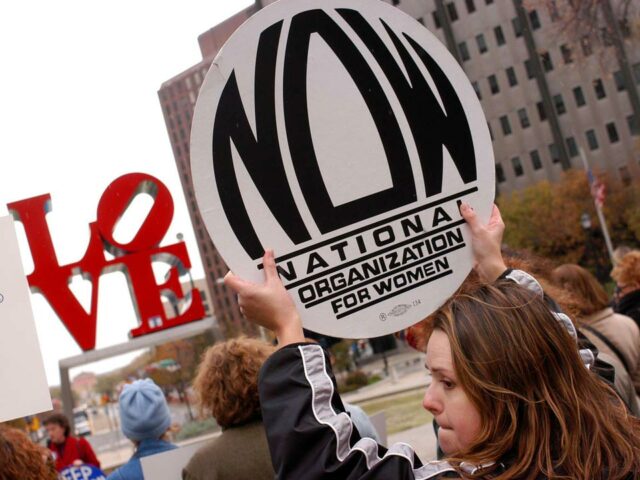
The organisation also pressured the Equal Employment Opportunity Commission, the agency responsible for overseeing workplace equality, to begin investigating actual cases of discrimination.
For decades, many American women needed their husband’s or another male relative’s signature to open a bank account or apply for a loan. NOW played an active role in the social and legal pressure that helped bring about the Equal Credit Opportunity Act of 1974, a law that prohibited sex-based discrimination in access to credit.
Over the following decades, NOW took part in campaigns addressing equal pay, reproductive rights, and equal access to professions traditionally dominated by men. The organisation’s approach combined public activism with legal strategies.
Mothers of the Plaza de Mayo
Argentina, 1977
Speaking about forced disappearances was extremely dangerous. At the height of the military dictatorship, the regime denied the abductions and provided no information about the whereabouts of thousands of people detained for political reasons.
They gathered in Plaza de Mayo, in front of the presidential palace, walked in circles, held photographs, and demanded something very basic: to know where their children were. Their symbol was the white headscarf.
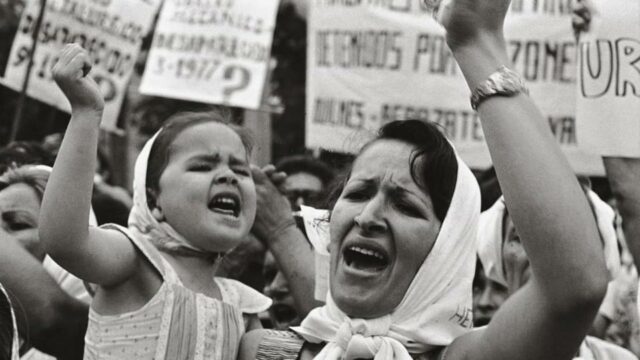
Over time, their persistence had an impact that extended far beyond Argentina’s borders. Journalists, human rights organisations, and foreign governments began paying attention to what was happening.
The group succeeded in bringing international attention to the issue of forced disappearances in Argentina.
After the dictatorship ended in 1983, these women’s efforts helped shape the work of CONADEP (the National Commission on the Disappearance of Persons) and the collection of testimonies documenting thousands of human rights violations.
The Langham Place Circle
United Kindom, 1858
In mid-19th-century London, professional opportunities and access to higher education for middle-class women were extremely limited.
A small group began meeting at a specific address: 19 Langham Place. Its members included prominent figures such as Barbara Bodichon, Bessie Rayner Parkes, and Emily Faithfull.
One of their first initiatives was to establish a periodical, The English Woman’s Journal, which explored issues such as education, employment, and legal reform.
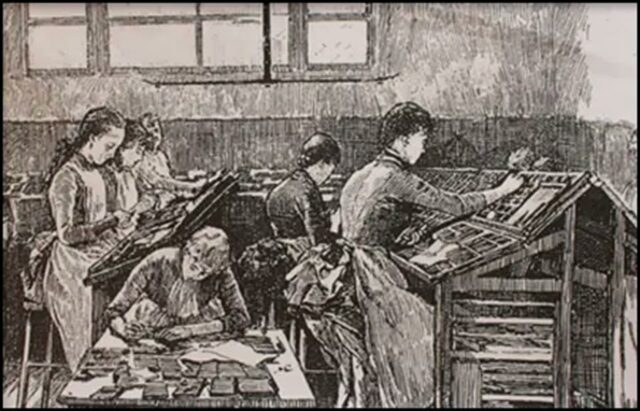
They founded the Society for Promoting the Employment of Women, an organisation dedicated to expanding women’s employment opportunities in professions that had previously been closed to them.
The group also supported campaigns that would eventually influence major legal reforms, such as the Married Women’s Property Acts, a series of laws passed between 1870 and 1882 that allowed married women to own and manage property in their own right.
Themis Association of Women Lawyers
Spain, 1987
In the 1980s and 1990s, Spain’s judicial system rarely incorporated a gender perspective into issues such as domestic violence, child custody, or workplace discrimination. Several Spanish women lawyers decided to establish an organisation dedicated to examining the law through the lens of women’s lived experiences.
One of its most important areas of work has been violence against women. For years, its members advocated for more comprehensive legal frameworks to address this reality.
These efforts contributed to the process that led to the adoption, in 2004, of the Organic Law on Comprehensive Protection Measures against Gender-Based Violence, which introduced specialised courts, protective measures, and specific public policies.
Themis took part in parliamentary debates, produced technical reports, and helped raise awareness of the need for a broader legal approach.
In addition to its legislative work, the association has developed free legal assistance programmes, training for judicial professionals, and public awareness campaigns on legal rights.
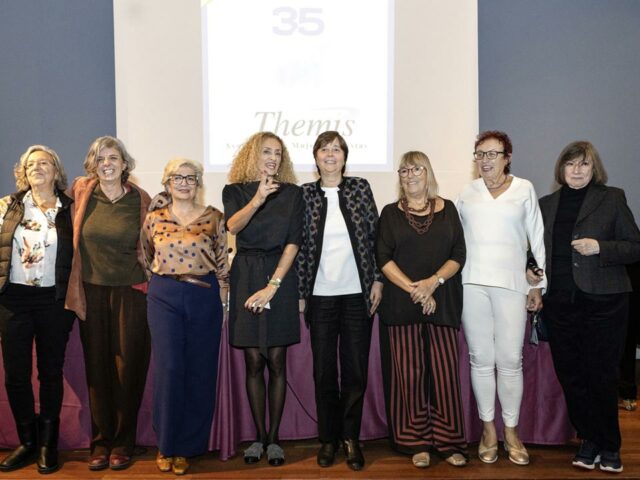
35 years fighting for equality and justice. Image from their website.
Unlike other movements that are more visible in the public sphere, these women lawyers often do their work in less visible settings: law offices, courtrooms, parliamentary committees, and training seminars.
Friendship Between Women as a Driving Force for Progress: Networks That Change the Course of History
These four examples come from very different contexts, but they share a common pattern: they were not individual initiatives. They were networks.
Looking at history from this perspective slightly shifts the focus. Instead of searching for an exceptional figure, something more complex and probably more true to life emerges: many women working together.
An invisible infrastructure.
A network that provides support. And when necessary, pushes things forward.

Our latest collection is called “Amigas” (Friends). And there’s a reason for that.